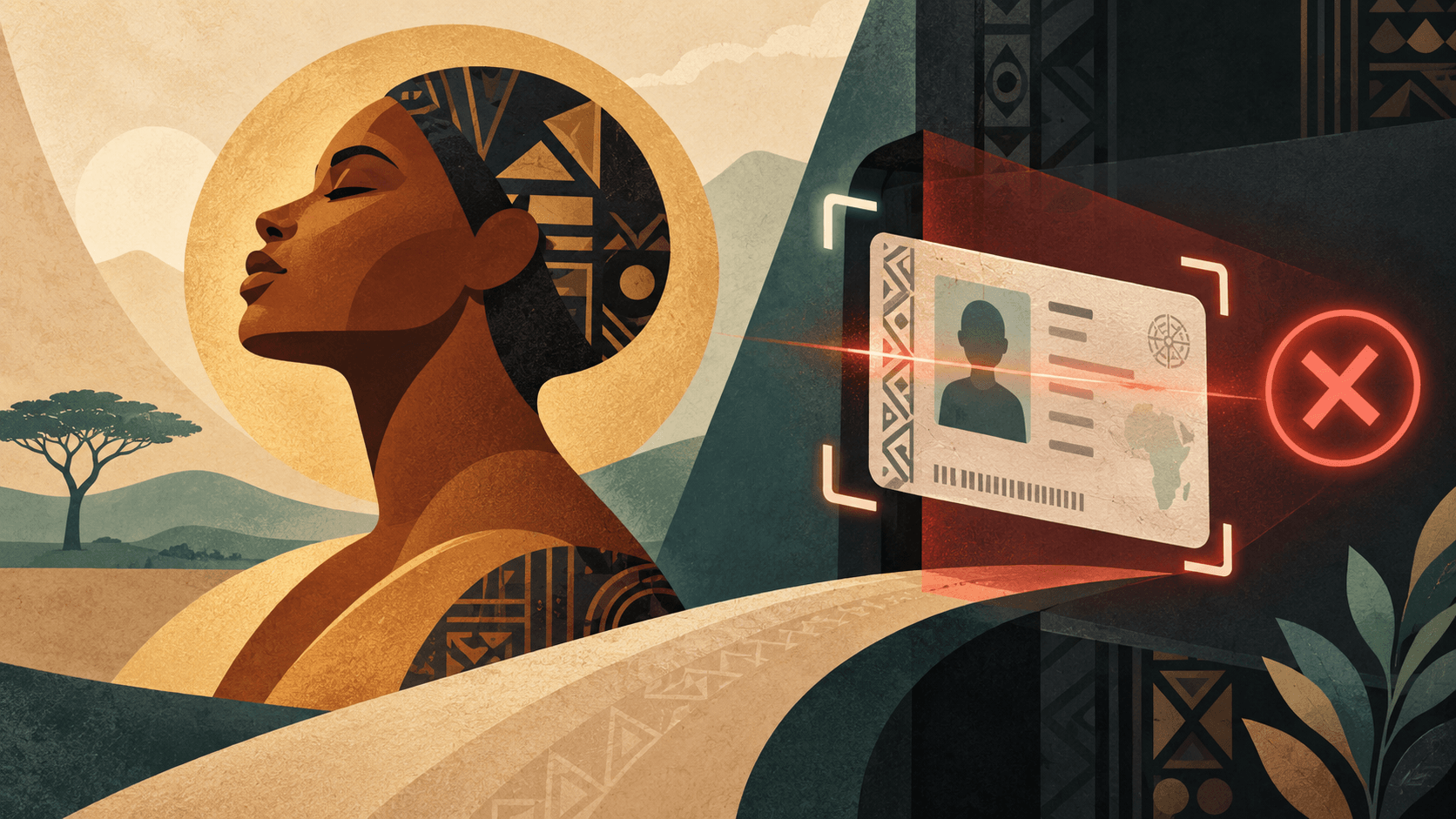
Verification systems are built to answer one question: is this person who they claim to be? But the way most of them fail answers a different question entirely, one the designers never meant to ask. When a check fails, the system quietly decides that the person is the problem. The truth is usually the opposite. The person is real. The document is real. It is the system that could not cope.
This distinction sounds academic until you watch someone get locked out of their own money because a camera could not read their ID in poor light. Then it is not academic at all.
Verification is where good intentions meet hard edges. Regulation demands proof of identity, and rightly so. But real people do not arrive in the clean condition the flow was designed for. They come with worn documents, names that were entered inconsistently across three different institutions, a phone shared with a family member, a camera that struggles in a dim room. The flow expects a laminated card held steady in bright light. The person has a photocopy and a cracked screen. When those two things meet, most systems blame the person.
In African markets the mismatch is sharper, because identity itself is more varied than the templates assume. A name may span multiple scripts or naming conventions the form was never built to hold. An address may be a landmark and a set of directions rather than a street and a number. A document may come from a neighbouring country, entirely valid, entirely unrecognised by a checker trained on one nation’s formats. None of this makes the person less real. It makes the system less ready. And when the system is not ready, it is the person who is turned away.
The moment matters too. Someone verifying their identity is rarely relaxed. They are often anxious, frequently doing it because something urgent depends on it: releasing a payment, claiming a grant, opening the account that their salary is about to land in. A cold rejection with no explanation, at that moment, does not just lose a signup. It tells the person the product does not work for people like them, and that is a hard belief to reverse.
Design as if the person is valid
So what does a system that respects the person actually do? It starts by assuming the person is valid and the check might be wrong, rather than the reverse. That single inversion changes every design decision that follows.
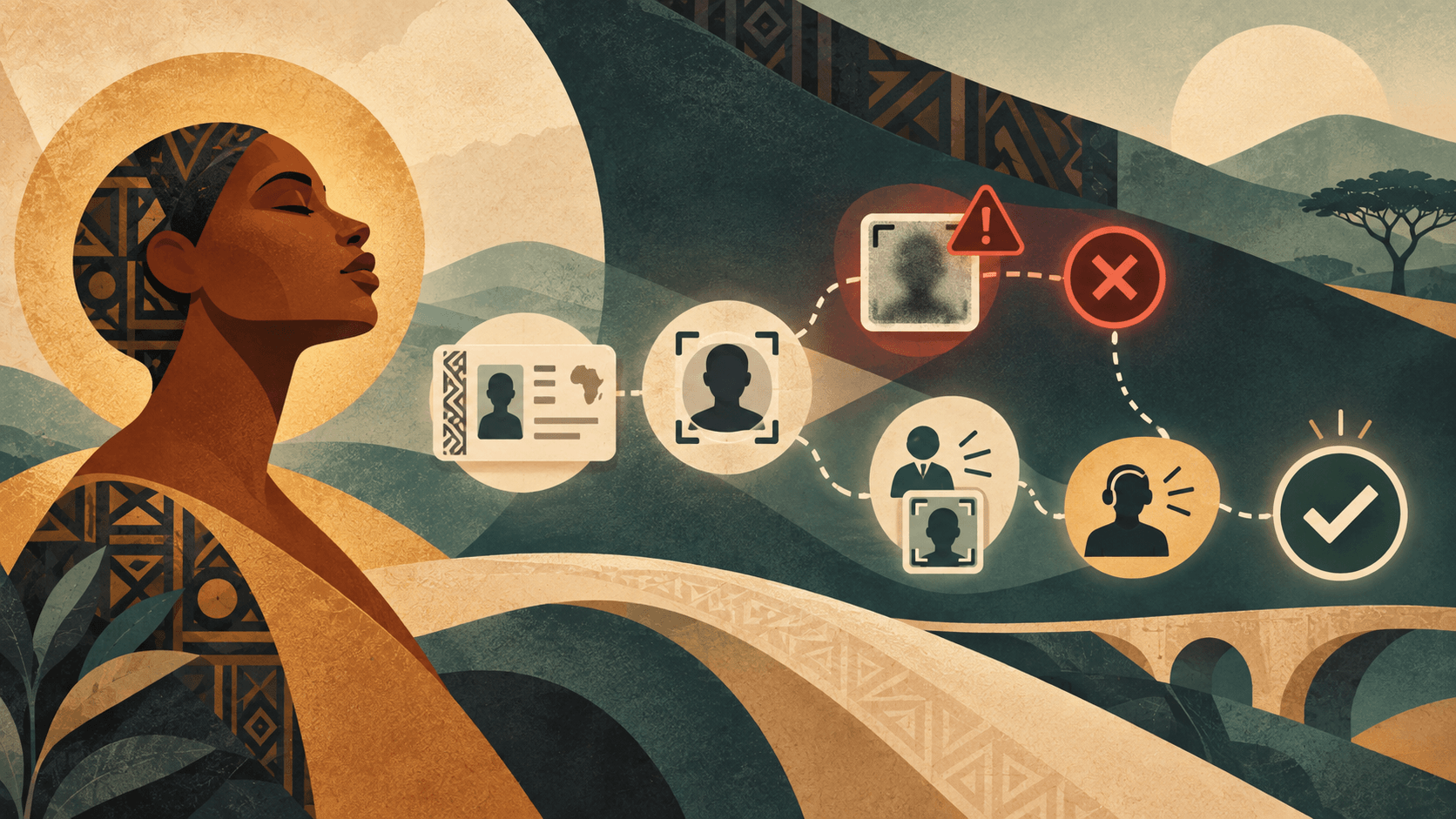
It means designing the capture step to prevent failure rather than punish it: telling people exactly what is needed and why, giving real-time feedback on a document photo or a face scan, catching the blurry image before submission instead of rejecting it after. It means writing rejection messages that explain what went wrong and what to do next, never a bare “verification failed” that leaves the person guessing whether to retry, wait or give up. And it means building a way through for the person the automated check cannot handle: a second method, a manual review, a route to a human, so that a failed check becomes a detour rather than a dead end.
That last point is the one most systems skip, and it is the one that matters most. Automated verification will always have a failure rate. The question is not whether some valid people will fail the automated check, because they will. The question is what happens to them when they do. A system with no fallback treats its own error rate as the user’s fault. A system designed with dignity treats it as a step to be caught, explained and resolved.
Getting this right is not mainly a technology problem. The face-matching and document-reading are largely solved. What is usually missing is the design decision to treat the people the technology fails as valid users to be helped, rather than edge cases to be discarded. That decision is free. It just has to be made.
Automated verification will always have a failure rate. The question is not whether valid people will fail the check. It is what happens to them when they do.
If your product verifies identity, look at what happens on the day a real person fails your check. That path, the one for the people the system was not ready for, tells you more about the product than the happy path ever will. AfriUX designs and builds complex digital systems for African markets, with a focus on the moments where trust is won, lost or repaired. If identity and verification is one of your high-stakes journeys, a Trust Audit is a good place to start.