Identity and verification is the journey where people prove who they are, from bank KYC to Govtech ID. It is also where products lose the most people: a rejected document, a face scan that fails in poor light, a step that assumes a name or an address that does not fit. Get it wrong and someone is locked out of their own money, benefits or services.
Where verification breaks
Verification is where good intentions meet hard edges. Regulation demands proof of identity; real people arrive with worn documents, inconsistent names, shared phones and cameras that struggle in low light.
In African markets the mismatch is sharper. A person may have a valid identity that the system was never designed to recognise: a name that spans multiple scripts, an address that is a landmark rather than a street, a document from a neighbouring country. When the flow cannot bend, the person is the one who gets excluded.
And the moment matters. Someone verifying their identity is often anxious, sometimes verifying for something urgent. A cold rejection with no explanation does not just lose a signup; it erodes trust in the whole product.
How
AfriUX approaches it
We treat verification as a journey to be guided through, not a gate to defend. We map every way it can fail and design a humane response to each, so people are helped forward rather than turned away.
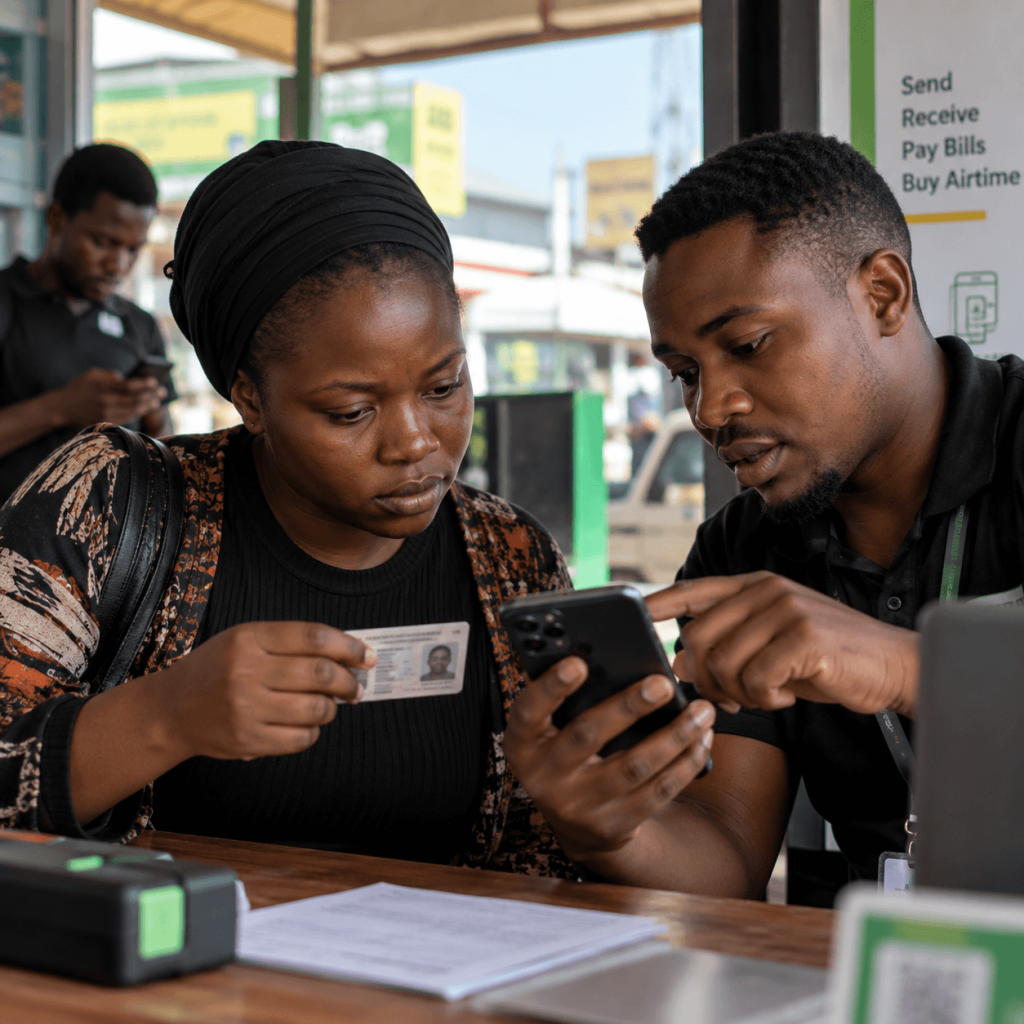
Clear guidance – We design capture steps that tell people exactly what is needed and why, with real-time feedback on document photos and face scans, so problems are caught before submission rather than after rejection.
Dignified fallback – When automated checks fail, we design a step-up path: a second method, a manual review, or a route to a human, always explained plainly, so a failed check is a detour rather than a dead end.

What good looks like
- People know what is needed before they start
- Rejections explain what went wrong and what to do
- A valid person is never left with no way through
- Names, scripts and addresses that don't fit the mould still work
- Capture works on low-end cameras and in poor lighting